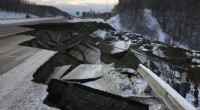
Trench
* Definition: A long, narrow, and often deep depression or cut in the Earth's surface, typically formed by erosion or tectonic activity.
* Characteristics:
* Long and narrow
* Deep and steep sides
* Usually formed by erosion (rivers, glaciers, etc.) or tectonic plates moving apart (rift valleys)
* Examples:
* Marianas Trench, the deepest known trench on Earth
* Grand Canyon, a trench carved by the Colorado River
* Ocean trenches, formed at convergent plate boundaries
Ridges
* Definition: A long, narrow, and often elevated strip of land or rock that rises above its surroundings.
* Characteristics:
* Long and narrow
* Elevated and with a distinct crest
* Formed by uplift, folding, or erosion (e.g., erosion resistant rock)
* Examples:
* Mountain ranges, formed by tectonic uplift
* Mid-ocean ridges, where new oceanic crust is created
* Coastal ridges, formed by erosion and deposition of sediment
Here's a simple analogy:
Think of a trench as a valley – a low area between higher points.
Think of a ridge as a hill or mountain range – a high area that rises above the surrounding land.
In summary:
* Trenches are depressions or cuts in the Earth's surface, while ridges are elevations.
* Trenches are typically formed by erosion or tectonic forces pulling apart, while ridges are formed by uplift or erosion.
* Trenches are typically low points, while ridges are high points.