* Rain Shadow Effect: As moist air rises up the windward side of the mountain, it cools and condenses, leading to precipitation. This leaves the air drier as it descends on the leeward side, resulting in a rain shadow.
* Adiabatic Warming: As the air descends on the leeward side, it is compressed and warms, further contributing to the drier and warmer conditions.
* Reduced Cloud Cover: Since the air on the leeward side is drier, there is less cloud formation, allowing for more sunlight to reach the ground.
Key characteristics of the leeward side climate:
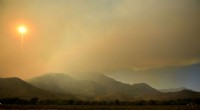
* Higher Temperatures: The lack of rain and the adiabatic warming contribute to higher temperatures on the leeward side compared to the windward side.
* Lower Humidity: The dry air on the leeward side leads to lower humidity levels.
* Less Precipitation: The rain shadow effect means that the leeward side receives significantly less precipitation than the windward side.
Examples:
* The Great Plains of North America: The Rocky Mountains create a rain shadow effect, resulting in dry, arid conditions on the leeward side.
* The Atacama Desert in Chile: The Andes Mountains block moisture from the Pacific Ocean, creating the driest desert on Earth on the leeward side.
Important Note: The specific climate on the leeward side will vary depending on factors such as the mountain's elevation, the prevailing wind direction, and the overall climate of the region.