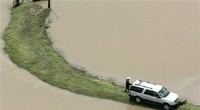
* Faults are fractures in the Earth's crust. These fractures represent zones of weakness where rocks have broken and moved.
* Earthquakes happen when these rocks suddenly slip past each other. This sudden release of energy creates seismic waves that radiate outward, causing the ground to shake.
Here's how it works:
1. Stress Builds Up: The Earth's tectonic plates are constantly moving. As they push, pull, or slide past each other, they apply stress to the rocks along fault lines.
2. Elastic Deformation: The rocks initially deform elastically, like a rubber band being stretched. This deformation stores energy.
3. Exceeding the Strength: When the stress exceeds the strength of the rocks, they can no longer hold the strain and suddenly break.
4. Rupture and Slip: The rock on either side of the fault slips past each other, releasing the stored energy as seismic waves. This is the earthquake.
Types of Faults and Earthquakes:
* Strike-Slip Faults: Rocks slide horizontally past each other. These cause earthquakes that move the ground side-to-side.
* Dip-Slip Faults: Rocks move vertically relative to each other. These cause earthquakes that move the ground up or down.
* Normal Faults: The hanging wall (block above the fault) moves down relative to the footwall (block below the fault). This is often associated with extensional forces.
* Reverse Faults: The hanging wall moves up relative to the footwall. This is often associated with compressional forces.
In Summary:
Earthquakes are the result of the sudden release of energy stored in rocks along fault lines. The movement of tectonic plates creates stress, which eventually causes rocks to break and slip, generating seismic waves. The type of fault determines the type of earthquake and the direction of ground motion.