Here's a breakdown of the process:
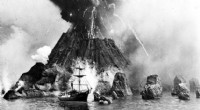
1. Eruption: During an explosive eruption, intense pressure within the volcano forces molten rock (magma) upward.
2. Fragmentation: As the magma rises, it encounters a sudden decrease in pressure, causing it to fragment into various sizes. Some of these fragments are large enough to be considered volcanic bombs.
3. Cooling and Solidification: The molten rock fragments are ejected into the atmosphere, where they begin to cool and solidify.
4. Shape Formation: As the fragments cool, they can take on different shapes depending on their initial size, viscosity, and the forces acting on them.
5. Impact: Volcanic bombs often have a flattened or streamlined shape due to their flight through the air and subsequent impact with the ground.
Types of Volcanic Bombs:
Volcanic bombs are classified based on their shape:
* Blocky Bombs: These bombs have angular, irregular shapes, suggesting they were ejected as solid or semi-solid chunks of magma.
* Spindle Bombs: These bombs are elongated and spindle-shaped, often with a smooth surface. They form from more viscous magma that spins as it flies through the air.
* Breadcrust Bombs: These bombs have a rough, crusty surface due to rapid cooling and solidification during flight.
* Ribbon Bombs: These bombs are flattened and elongated, resembling a ribbon. They form from very viscous magma that stretches and flattens as it flies through the air.
Importance of Volcanic Bombs:
Volcanic bombs are important for studying volcanoes because:
* Eruption Dynamics: Their shape, size, and composition provide valuable insights into the eruption dynamics and the properties of the magma.
* Geological History: Volcanic bombs can help researchers understand the history of volcanic eruptions and their impact on the surrounding landscape.
* Hazard Assessment: The size and distribution of volcanic bombs are crucial for assessing the potential hazards associated with volcanic eruptions, particularly to human settlements and infrastructure.