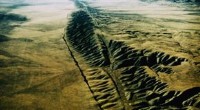
* Time: Over millions and billions of years, geological processes reshape the Earth's surface.
* Location: Different locations experience different geological forces.
* Type of sedimentary rock: Some rocks are more resistant to erosion than others.
Here are some of the possibilities of what might happen to the first sedimentary layers:
* Erosion: The layers could be eroded away by wind, rain, or ice. This is a constant process that wears down mountains and reshapes landscapes.
* Subduction: At plate boundaries, oceanic plates can slide beneath continental plates (subduction). This process can take the sedimentary layers deep into the Earth's mantle, where they are melted and recycled.
* Uplift and Deformation: Geological forces can push sedimentary layers upwards, creating mountains or plateaus. These layers might then be exposed to erosion.
* Metamorphism: Intense heat and pressure can transform sedimentary rocks into metamorphic rocks. This changes their composition and appearance.
* Burial and Preservation: Sometimes, sedimentary layers are buried under newer layers and preserved. These are the layers that geologists study to understand Earth's history.
Think of it like this: Imagine building a sandcastle on the beach. Waves will erode it away, the tide will wash it away, and the wind will blow away the sand. The Earth's surface is much the same - it's constantly being reshaped by geological forces.
Finding the Evidence:
While the first layers might be lost, we can still find evidence of their existence through:
* Fossil records: Fossils within younger sedimentary layers can tell us about the organisms that lived during the time when the first layers were forming.
* Rock fragments: We might find fragments of the original rocks within younger sedimentary layers.
* Geological mapping and analysis: Geologists use maps and data to reconstruct the Earth's history and identify areas where the first layers might have been preserved.
Ultimately, the fate of the first sedimentary rock layers is varied and dependent on the specific geological history of a region. However, they leave behind clues that help us understand the evolution of our planet.