1. Weathering: This is the initial breakdown of existing rocks into smaller fragments. Weathering can be physical (e.g., frost wedging, abrasion) or chemical (e.g., dissolution, oxidation).
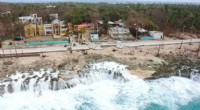
2. Erosion: This is the process of transporting the weathered rock fragments away from their original location. Erosion can be caused by wind, water, ice, or gravity.
3. Deposition: This is the process of the transported rock fragments settling out and accumulating in a new location. Deposition occurs when the transporting force (wind, water, etc.) loses energy.
These three processes work together in a continuous cycle to form clastic rocks. The type of clastic rock formed depends on the specific details of the weathering, erosion, and deposition processes, such as the type of source rock, the climate, the transporting medium, and the depositional environment.