Here's how it works:
* Accumulation: Snow and ice accumulate in a high-altitude hollow or depression.
* Erosion: The weight of the accumulated ice exerts pressure on the surrounding bedrock.
* Plucking: As the ice moves, it freezes to the bedrock and pulls out pieces, deepening the hollow.
* Abrasion: The ice, laden with rock fragments, grinds and scrapes the bedrock, further deepening and widening the depression.
Characteristics of a cirque:
* Bowl-shaped: The depression is often semicircular or horseshoe-shaped.
* Steep walls: The sides of the cirque are typically steep and rocky.
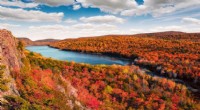
* Tarn: A lake often forms at the bottom of the cirque, known as a tarn.
* Headwall: The back wall of the cirque, often with a steep drop.
* Aretes: Sharp, jagged ridges often form between two adjacent cirques.
* Horn: A peak formed when three or more cirques intersect.
Cirques are a distinctive feature of glaciated landscapes and provide evidence of past glacial activity. They can be found in mountainous regions around the world, often forming the source of glaciers and rivers.