* The Rock Cycle: Rocks are constantly changing through the rock cycle. This cycle involves three main types of rocks: igneous, sedimentary, and metamorphic.
* Metamorphic to Igneous: For a metamorphic rock to become igneous, it needs to go through the following steps:
1. Melting: The metamorphic rock must be heated to the point where it melts. This usually happens deep within the Earth's crust or mantle.
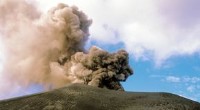
2. Cooling and Solidification: The molten rock (magma) then needs to cool and solidify. This can happen either underground (forming intrusive igneous rocks) or by erupting on the surface (forming extrusive igneous rocks).
Therefore, the "time" it takes depends on a few factors:
* Depth and Temperature: How deep the metamorphic rock is buried and how hot it gets determines how quickly it melts.
* Composition: Some rocks melt at lower temperatures than others.
* Cooling Rate: The speed at which the molten rock cools affects the size and arrangement of the crystals in the resulting igneous rock.
In summary, it's not a straightforward conversion, but a series of events involving melting and solidification within the Earth's crust and mantle.