Here's a breakdown:
* Composition: Primarily made up of silicate minerals like olivine and pyroxene.
* Thickness: Extends about 2,900 kilometers (1,800 miles) down from the crust.
* Temperature: Increases with depth, ranging from about 1,000°C (1,832°F) at the top to around 4,000°C (7,232°F) at the bottom.
* Behavior: While solid, the immense pressure and heat cause the mantle to behave like a very slow-moving fluid. This movement is called convection, and it's the driving force behind plate tectonics.
Key functions of the mantle:
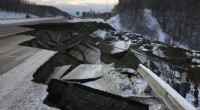
* Plate tectonics: The movement of the mantle drives the movement of tectonic plates, causing earthquakes, volcanoes, and mountain formation.
* Volcanism: Magma, molten rock from the mantle, rises to the surface through volcanoes.
* Earth's magnetic field: The movement of the Earth's core, which is influenced by the mantle, generates the planet's magnetic field.
Think of the mantle as a slow-moving, churning engine that powers the Earth's dynamic surface.