Here's why:
* Magma: Molten rock found beneath the Earth's surface.
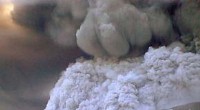
* Extrusive: Refers to the process of volcanic eruption where magma is expelled onto the Earth's surface.
* Igneous Rock: Rock formed from the cooling and solidification of magma or lava.
Examples of extrusive igneous rocks include:
* Basalt: A dark-colored, fine-grained rock commonly found in volcanic flows.
* Rhyolite: A light-colored, fine-grained rock with a glassy texture.
* Obsidian: A dark, glassy rock formed when lava cools very rapidly.
The rapid cooling and solidification of lava above ground results in smaller crystals and a more fine-grained texture compared to intrusive igneous rocks, which form from magma cooling slowly beneath the surface.