Here's why:
* Naturally occurring: Pyrite is found in nature.
* Inorganic: It's not derived from living organisms.
* Solid: Pyrite exists in a solid state.
* Definite chemical composition: Pyrite has a consistent chemical formula (FeS2 - iron sulfide).
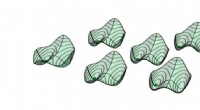
* Ordered internal structure: Its atoms are arranged in a specific, repeating pattern, giving it a crystalline structure.
Pyrite is often called "fool's gold" because it has a golden color and metallic luster, but it's not gold.