Here's a breakdown:
* Weathering: This is the process where rocks are broken down into smaller pieces by forces like wind, rain, ice, or chemical reactions.
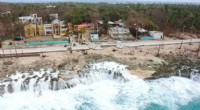
* Erosion: This is the process of transporting those broken-down rock fragments (sediments) away from their original location by wind, water, or ice.
* Compaction: As sediments accumulate in a basin, the weight of the overlying sediments presses down on the lower layers, squeezing out water and air. This process compacts the sediments together.
* Cementation: Minerals dissolved in the water within the sediments crystallize and act like glue, binding the sediment particles together.
Some examples of clastic sedimentary rocks include:
* Sandstone: Formed from sand-sized grains.
* Conglomerate: Formed from gravel-sized fragments.
* Shale: Formed from very fine-grained clay particles.
Let me know if you'd like to learn more about any of these rocks!