Here's why:
* Transverse: This term describes the orientation of the dune, running perpendicular to the prevailing wind direction.
* Dunes: These are mounds of sand created by wind action.
How they form:
* Wind direction: The wind blows consistently in one direction.
* Sand movement: As wind blows across the sand, it picks up grains and carries them.
* Obstruction: When the wind encounters an obstruction (like a small hill, rock, or even a slight difference in the sand's surface), it slows down, depositing sand on the windward side (the side facing the wind).
* Ridge formation: The deposited sand accumulates over time, forming a ridge. The wind continues to pick up sand from the leeward side (the side away from the wind) and deposits it on the crest, making the ridge grow.
* Perpendicular alignment: The ridges grow perpendicular to the wind direction, creating the characteristic transverse dune shape.
Key features of transverse dunes:
* Long, linear ridges: They can be quite long and often run for miles.
* Crescent shape: The ridges usually have a crescent shape, with the horns pointing downwind.
* Steep windward slopes: The side facing the wind is typically steep.
* Gentle leeward slopes: The side away from the wind has a more gradual slope.
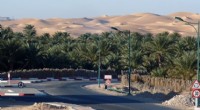
Example: The large, crescent-shaped dunes in the Sahara Desert are classic examples of transverse dunes.