Here's why:
* Intrusive rocks form when magma cools and crystallizes slowly beneath the Earth's surface. The slow cooling process gives the minerals ample time to grow into large, well-defined crystals.
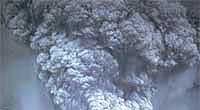
* Extrusive rocks form when lava erupts onto the Earth's surface and cools rapidly. This rapid cooling does not allow for large crystals to form, resulting in rocks with tiny, often microscopic crystals or even a glassy texture.
Examples of intrusive igneous rocks with large crystals:
* Granite: A common intrusive igneous rock with large crystals of quartz, feldspar, and mica.
* Diorite: Another intrusive igneous rock with large crystals of plagioclase feldspar, hornblende, and biotite.
* Gabbro: A dark-colored intrusive igneous rock with large crystals of pyroxene and plagioclase feldspar.
So, if you want to find igneous rocks with large, visible crystals, look for intrusive rocks formed deep underground!