1. Chemical Composition:
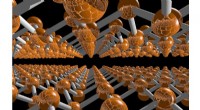
* Chemical formula: This is the most fundamental difference between minerals. Each mineral has a specific chemical formula, reflecting the elements and their proportions within the crystal structure. Analyzing the chemical composition (using techniques like X-ray diffraction or spectroscopy) can definitively identify a mineral.
2. Physical Properties:
* Color: While not always reliable (some minerals can come in various colors), color can be a helpful initial indicator.
* Streak: The color of a mineral's powder when rubbed on a streak plate. This can be more consistent than the mineral's overall color.
* Hardness: Measured on Mohs Hardness Scale (1-10). It's the mineral's resistance to scratching.
* Cleavage: The tendency of a mineral to break along specific planes of weakness, creating smooth, flat surfaces.
* Fracture: How a mineral breaks when not along a cleavage plane. Examples include conchoidal (curved, shell-like), uneven, and splintery.
* Luster: The way a mineral reflects light (metallic, glassy, pearly, etc.).
* Crystal Habit: The shape of a mineral crystal, if it's well-formed.
* Specific Gravity: The ratio of the mineral's density to the density of water.
* Magnetism: Some minerals are magnetic (e.g., magnetite).
* Fluorescence: The ability to emit visible light when exposed to UV light.
3. Optical Properties:
* Refractive Index: How much light bends as it passes through the mineral. This can be measured with a refractometer.
* Birefringence: The splitting of light into two rays as it passes through a mineral. Can be observed with a polarizing microscope.
* Pleochroism: The appearance of different colors when viewed from different directions.
4. Other Properties:
* Taste: Some minerals have a distinct taste (e.g., halite is salty).
* Smell: Certain minerals have a characteristic odor (e.g., sulfur smells like rotten eggs).
* Radioactivity: Some minerals are radioactive (e.g., uranium).
Important Considerations:
* No single property is definitive: Several properties may need to be examined to distinguish between minerals.
* Impurities can influence properties: The presence of impurities can change the color, luster, and other properties of a mineral.
* Expert assistance: If you're unsure about identifying a mineral, it's always best to consult a geologist or mineral specialist.
By combining these properties, you can accurately differentiate between different mineral samples.