Composition:
* Basalt: A mafic igneous rock, meaning it's rich in magnesium (Mg) and iron (Fe). It's typically dark grey to black in color and contains minerals like pyroxene, olivine, and plagioclase feldspar.
* Granite: A felsic igneous rock, meaning it's rich in silica (SiO2) and has a high abundance of alkali metals like sodium and potassium. Granite is typically light-colored, often with a pinkish hue, and contains minerals like quartz, feldspar (orthoclase and plagioclase), and mica.
Formation:
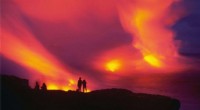
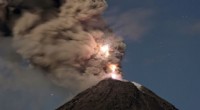
* Basalt: Forms from rapidly cooling magma that erupts onto the Earth's surface, often from volcanoes. This rapid cooling leads to fine-grained textures. Basalt is commonly found in oceanic crust and as lava flows.
* Granite: Forms from slowly cooling magma deep beneath the Earth's surface. This slow cooling allows for larger crystals to grow, resulting in a coarse-grained texture. Granite is typically found in continental crust and is often associated with mountain building.
Appearance:
* Basalt: Dark grey to black, often with a fine-grained texture. Can contain small vesicles (air pockets) or glassy textures.
* Granite: Light-colored, typically pink or grey, with a coarse-grained texture. Often contains large crystals (phenocrysts) embedded in a finer-grained matrix.
Density and Hardness:
* Basalt: Denser and harder than granite.
* Granite: Less dense and slightly softer than basalt.
Other Differences:
* Chemical composition: Basalt has a lower silica content than granite.
* Uses: Basalt is often used in road construction and as aggregate, while granite is used for building materials, monuments, and countertops.
In summary, basalt and granite are two distinct rock types with differing compositions, formation processes, and appearances. They play important roles in Earth's geology and have various uses for human society.