Trap Rock:
* Composition: Primarily composed of basalt, a dark-colored, fine-grained volcanic rock.
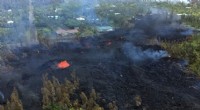
* Formation: Formed from rapidly cooled lava flows, often found in areas with volcanic activity.
* Characteristics:
* Dark gray to black in color.
* Dense and hard, with a fine-grained texture.
* Often exhibits columnar jointing, forming distinct vertical columns.
* Commonly used in construction, road building, and landscaping.
Granite:
* Composition: Composed primarily of quartz, feldspar, and mica, with smaller amounts of other minerals.
* Formation: Formed from slowly cooled magma deep within the Earth's crust.
* Characteristics:
* Light-colored, typically ranging from white to pink or gray.
* Coarse-grained texture, with visible crystals.
* Strong and durable, resistant to weathering.
* Widely used in construction, monuments, and sculptures.
Key Differences:
| Feature | Trap Rock | Granite |
|---|---|---|
| Composition | Basalt | Quartz, feldspar, mica |
| Formation | Volcanic lava flows | Deep within the Earth's crust |
| Color | Dark gray to black | Light-colored (white, pink, gray) |
| Texture | Fine-grained | Coarse-grained |
| Durability | Hard and durable | Very strong and durable |
| Uses | Construction, road building, landscaping | Construction, monuments, sculptures |
In summary:
* Trap rock is a dark, fine-grained volcanic rock formed from cooled lava flows, while granite is a light-colored, coarse-grained igneous rock formed from cooled magma.
* They have distinct compositions, formation processes, and uses, making them suitable for different applications.