1. Earth's Structure:
* Lithosphere: The rigid outer layer of Earth, consisting of the crust and upper mantle. It is divided into tectonic plates.
* Asthenosphere: A semi-molten layer beneath the lithosphere, allowing for plate movement.
2. Plate Movement:
* Continents and ocean floors are not static: They are constantly moving, driven by convection currents in the mantle.
* Plates interact at boundaries: These interactions create various geological features.
* Three types of plate boundaries:
* Convergent boundaries: Plates collide, resulting in mountains, volcanoes, and earthquakes.
* Divergent boundaries: Plates move apart, creating new crust and forming mid-ocean ridges.
* Transform boundaries: Plates slide past each other horizontally, causing earthquakes.
3. Geological Features and Phenomena:
* Mountain ranges: Formed at convergent boundaries where continental plates collide.
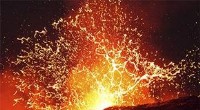
* Volcanoes: Formed at convergent and divergent boundaries, where magma rises to the surface.
* Earthquakes: Occur at all types of boundaries, due to the release of energy from plate movements.
* Mid-ocean ridges: Underwater mountain ranges formed at divergent boundaries where new oceanic crust is created.
* Trenches: Deep depressions in the ocean floor formed at convergent boundaries where one plate subducts beneath another.
4. Evidence:
* Continental Drift: The fit of continents, fossil distribution, and rock formations on different continents suggest that they were once connected.
* Seafloor Spreading: Magnetic stripes on the ocean floor, the age of oceanic crust, and the presence of mid-ocean ridges provide evidence for the creation of new crust at divergent boundaries.
* Plate motion: GPS measurements and satellite data show that plates are currently moving.
5. Significance:
* Explains the formation of Earth's surface features: Mountains, volcanoes, earthquakes, and ocean basins are all related to plate tectonics.
* Understanding past and predicting future geological events: By studying plate movements, we can learn about past geological events and potentially predict future earthquakes and volcanic eruptions.
* Resource exploration: Plate tectonics plays a role in the formation of mineral deposits and hydrocarbon reservoirs.
In summary, plate tectonics is a fundamental theory that explains the movement of Earth's lithosphere and its impact on the planet's surface features. It is a powerful tool for understanding Earth's history and predicting future geological events.