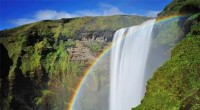
1. Lowering of the mountain: This is the most obvious outcome. Erosion gradually wears down the mountain, reducing its overall height. Over long periods, this can significantly change the landscape, creating hills or even flat plains.
2. Changing the shape of the mountain: Depending on the type of erosion (wind, water, ice), the mountain's shape will change in different ways.
* Water erosion: Rivers and streams carve out valleys, creating a more jagged and uneven profile.
* Wind erosion: Wind can smooth out the mountain's surface, creating rounded hills.
* Glacial erosion: Glaciers carve out U-shaped valleys and create sharp peaks, often leaving behind cirques (bowl-shaped depressions) and moraines (piles of rock debris).
3. Exposing underlying rock: As the mountain top is eroded, it exposes the rock layers underneath. This can reveal different types of rock, with varying colors, textures, and mineral compositions. These exposed rocks can then be further eroded, creating new features.
4. Formation of new landforms: The eroded material from the mountain top can be transported by wind, water, or ice to other areas. This sediment can accumulate and form new landforms such as alluvial fans, deltas, sand dunes, or moraines.
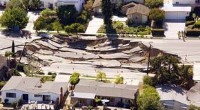
5. Affecting the local ecosystem: Erosion can change the mountain's microclimate, influencing vegetation, water availability, and wildlife habitats. For example, erosion can create new slopes that are more susceptible to landslides, impacting local communities.
6. Revealing ancient geological history: Erosion can expose deep rock layers that have been buried for millions of years. This can provide valuable information about the Earth's history, past environments, and the processes that shaped the landscape.
In summary, the erosion of a mountain top leads to a complex series of changes, shaping the mountain's appearance, revealing its underlying geology, and impacting the surrounding ecosystem. This process is a continuous cycle of weathering, erosion, and deposition, shaping the Earth's surface over millions of years.