Erosive Forces:
* U-shaped valleys: Glaciers act like giant bulldozers, carving out broad, U-shaped valleys from the original V-shaped valleys created by rivers. The sheer weight of ice and the abrasive action of embedded rocks gouge out the valley walls, leaving behind steep, often cliff-like sides.
* Cirques: These bowl-shaped depressions at the head of valleys are formed as glaciers erode the bedrock. They often contain lakes or tarns, reflecting the former presence of ice.
* Aretes: Jagged, knife-like ridges form between two adjacent cirques, as glaciers erode away the intervening rock.
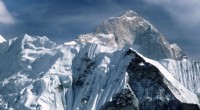
* Peaks: The highest points of a mountain range, often formed by the intersection of several aretes, are also sculpted by glacial erosion.
* Hanging valleys: Smaller valleys carved by tributary glaciers often end abruptly, hanging high above the main valley floor. This is because the main glacier eroded deeper than the tributary glaciers.
* Fjords: When glaciers carve deep valleys that extend to the sea, they create fjords, which are long, narrow inlets with steep, often towering sides.
Depositional Features:
* Moraines: As glaciers melt, they deposit sediment in piles known as moraines. Lateral moraines form along the sides of the glacier, while terminal moraines mark the furthest extent of glacial advance.
* Outwash plains: Meltwater from glaciers carries sediment downstream, creating flat, often fertile plains known as outwash plains.
* Drumlins: These streamlined hills of glacial till are often found in groups, indicating the direction of ice flow.
* Kettles: Depressions in the landscape often filled with water, created by the melting of buried blocks of ice.
Other Impacts:
* Altered drainage patterns: Glaciers can redirect river courses, creating new lakes and altering the overall drainage of a region.
* Exposed bedrock: Glaciation can strip away soil and vegetation, exposing the underlying bedrock.
* Alpine meadows: Glaciers can create flat areas, known as alpine meadows, where vegetation can thrive.
Overall, glaciation creates a rugged and dramatic landscape, characterized by sharp peaks, deep valleys, and distinctive depositional features. The influence of glaciers can be observed in the shape of mountains, the presence of lakes, and the distribution of vegetation.