* Phaneritic describes a texture where the mineral grains are large enough to be seen with the naked eye. This is because the magma cooled slowly, allowing ample time for crystals to grow.
Here are some other descriptive terms that could be used:
* Coarse-grained: This is a general term for rocks with large crystals.
* Equigranular: This implies that the crystals are roughly the same size.
* Holocrystalline: This means the rock is entirely composed of crystals.
Examples of phaneritic igneous rocks:
* Granite: This is a very common example with large, well-defined crystals.
* Diorite: Another common rock with a phaneritic texture.
Contrast this to an extrusive igneous rock:
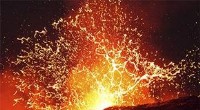
* Aphanitic: This texture describes rocks with very small crystals, often too small to see without a magnifying glass. This is because the magma cooled quickly above ground, not giving crystals time to grow.
* Porphyritic: This texture features a mix of large crystals (phenocrysts) embedded in a finer-grained matrix. This suggests the magma cooled slowly at first, allowing large crystals to form, then cooled quickly later on.