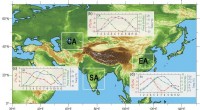
Mountain climates are highly variable, influenced by factors like:
* Altitude: Temperature decreases with altitude at a rate of about 6.5°C per 1000 meters. This means higher peaks are significantly colder than lower slopes.
* Latitude: Mountains near the equator experience different climates than those closer to the poles.
* Slope: The side of the mountain facing the sun (the "sunny" slope) is warmer and drier than the shaded side.
* Wind patterns: Wind can carry moisture and influence temperature and precipitation.
* Aspect: The direction a slope faces (north, south, east, west) can impact sunlight exposure and temperature.
These factors create microclimates within mountain ranges, meaning that even within a small area, you can find diverse weather conditions.
General Characteristics of Mountain Climates:
* Lower temperatures: Due to the altitude, mountains are generally colder than surrounding lowlands.
* Higher precipitation: As air rises, it cools and condenses, leading to more rainfall or snowfall.
* Strong winds: Mountain peaks experience strong winds, which can make conditions harsh.
* Varied vegetation: Depending on altitude, you can find different plant communities, from forests to meadows to alpine tundra.
* Unique wildlife: Mountain environments host diverse wildlife, adapted to the challenging conditions.
Examples of Mountain Climate Types:
* Alpine climate: High altitude, cold, snowy, with limited vegetation.
* Subalpine climate: Moderate altitude, cooler temperatures, with forests and meadows.
* Montane climate: Lower altitude, milder temperatures, with forests and grasslands.
Impacts of Mountain Climates:
* Agriculture: Limited growing season and harsh conditions can restrict agriculture in mountainous areas.
* Human settlements: Life in mountainous regions presents challenges due to difficult access, limited resources, and extreme weather.
* Biodiversity: Mountains are biodiversity hotspots, home to unique species adapted to the specific conditions.
* Climate change: Mountains are particularly vulnerable to climate change, with glaciers melting and vegetation shifting.
Understanding mountain climates is crucial for:
* Resource management: Balancing the needs of human populations with the preservation of mountain ecosystems.
* Tourism: Planning for safe and enjoyable experiences in mountainous areas.
* Climate research: Studying the impact of climate change on mountain environments.
By understanding the complexities of mountain climates, we can better appreciate their unique beauty, the challenges they present, and their vital role in the global ecosystem.