Here's a breakdown of how they form:
1. Magma Accumulation: Molten rock (magma) rises from deep within the Earth's mantle. It accumulates in a chamber beneath the Earth's crust.
2. Pressure Build-up: The magma exerts pressure on the surrounding rock.
3. Crustal Uplift: As pressure increases, the crust above the magma chamber begins to bulge upward.
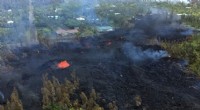
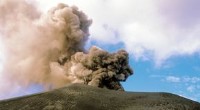
4. Eruptions: Eventually, the pressure becomes too great, and the magma erupts through the surface, creating a volcano.
5. Conical Shape: Repeated eruptions build up layers of lava, ash, and other volcanic debris, forming the characteristic cone shape of a stratovolcano.
Examples of famous stratovolcanoes include Mount Fuji (Japan), Mount Vesuvius (Italy), and Mount Rainier (USA).