1. Mantle Plumes:
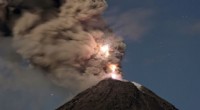
* Imagine a hot spot deep in the Earth's mantle, like a giant blowtorch.
* This hot spot can create a plume of rising magma, which can pierce the Earth's crust.
* As the magma cools and solidifies, it forms volcanic mountains.
* The Hawaiian Islands are a prime example of this type of mountain formation.
2. Uplift and Erosion:
* Sometimes, areas within a plate can experience a slow, gradual uplift, possibly due to:
* Isostatic rebound: This happens when the weight of glaciers or ice sheets is removed, causing the underlying landmass to rise.
* Thermal expansion: The crust can expand and rise due to heat from the mantle.
* This uplift exposes rock layers to weathering and erosion, which can carve out valleys and create mountain ranges.
* The Appalachian Mountains in North America are a good example of mountains formed by uplift and erosion.
3. Faulting:
* Even within a plate, stresses can build up and lead to faulting, where the crust breaks and shifts.
* This can create mountain ranges if one side of the fault rises relative to the other.
* The Black Hills of South Dakota are a classic example of mountains formed by faulting.
4. Other Factors:
* Impact craters: Giant asteroid impacts can create massive depressions, which can later be uplifted and eroded to form mountains.
* Folding and buckling: In some cases, layers of sedimentary rock can be folded and buckled by compressional forces within the plate, leading to mountain formation.
It's important to note that:
* Intraplate mountains are often much older than mountains formed at plate boundaries.
* They tend to be less dramatic and less "sharp" than mountains formed by plate collisions.
The formation of mountains, whether at plate boundaries or within plates, is a complex process that involves many factors and is still being studied by geologists.