Atmosphere:
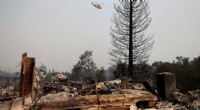
* Initial shockwave and wildfires: The impact created a massive shockwave that ripped through the atmosphere, generating immense heat and setting vast areas of the globe ablaze. This ignited widespread wildfires that released huge amounts of soot and ash into the atmosphere, obscuring the sun.
* Global dust cloud and "impact winter": The collision ejected enormous quantities of dust and debris into the atmosphere, forming a thick, global cloud that blocked out sunlight for months, if not years. This "impact winter" caused a dramatic drop in global temperatures, disrupting ecosystems and leading to widespread extinctions.
* Acid rain: The impact also vaporized massive amounts of sulfur-containing rocks, releasing sulfur dioxide into the atmosphere. This gas reacted with water vapor to form sulfuric acid, causing widespread acid rain. Acid rain would have further damaged ecosystems and contributed to the extinction of many species.
* Ozone depletion: The impact likely depleted the ozone layer, which protects life from harmful ultraviolet radiation. This increased exposure to UV radiation would have stressed and killed many organisms, particularly those living on land.
Biosphere:
* Mass extinction: The catastrophic environmental changes caused by the impact led to the extinction of approximately 76% of all plant and animal species on Earth, including all non-avian dinosaurs. The event marked the end of the Mesozoic Era and the beginning of the Cenozoic Era.
* Disruption of food webs: The extinction of major predator and prey species caused widespread disruption to food webs, leading to cascading extinctions across the globe.
* Ocean acidification: The large-scale release of carbon dioxide from the impact and subsequent wildfires led to a significant increase in ocean acidity, which would have harmed many marine organisms.
* Long-term consequences: The environmental changes triggered by the impact had long-lasting consequences for the Earth's biosphere. The extinctions allowed for the diversification of surviving species and the rise of new ecological niches, ultimately paving the way for the evolution of modern mammals.
Key Points:
* The meteorite collision had a profound and multifaceted impact on Earth's atmosphere and biosphere.
* The immediate effects included wildfires, a global dust cloud, acid rain, and ozone depletion, all of which caused widespread extinctions.
* The long-term effects included the disruption of food webs, ocean acidification, and the rise of new ecosystems.
* The event fundamentally altered the course of life on Earth, leading to the dominance of mammals and the emergence of modern ecosystems.
While the immediate aftermath of the impact was catastrophic, it also created an opportunity for new life forms to thrive, ultimately shaping the future of our planet.