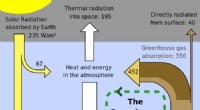
* Surface: The average surface temperature is about 14°C (57°F). This is a global average, and temperatures vary widely depending on location, time of year, and other factors.
* Near surface: The temperature increases with depth, typically by about 25°C (45°F) per kilometer. This is known as the geothermal gradient.
* Shallow crust: At depths of around 10-15 kilometers, the temperature can reach around 300-400°C (572-752°F). This is where rocks can start to melt and form magma.
* Deep crust: Temperatures in the deeper crust can reach over 1,000°C (1,832°F).
Important note: The temperature of Earth's crust can vary significantly due to factors such as:
* Location: Geothermal activity, volcanic regions, and plate boundaries can have much higher temperatures than other areas.
* Rock type: Different rock types have different thermal conductivities, affecting the heat flow.
* Heat flow from the mantle: The Earth's mantle is much hotter than the crust, and heat flows from the mantle into the crust.
Therefore, it's not possible to give a single temperature for the entire Earth's crust. It's a complex system with varying temperatures depending on depth and location.