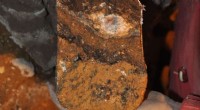
Sedimentary Rocks
* Formation: Formed from the accumulation and cementation of sediments, which are fragments of pre-existing rocks, minerals, or organic matter.
* Composition: Can be composed of a variety of materials, including sand, clay, limestone, and organic matter.
* Examples: Sandstone, limestone, shale, coal (in its raw form, before being burned).
* Uses: Building materials, construction aggregates, soil amendments, and some types are sources of oil and gas.
* Renewable/Non-Renewable: Some sedimentary rocks, like sandstone, are constantly being formed, but others, like coal, are considered non-renewable.
Fossil Fuels
* Formation: Formed over millions of years from the remains of ancient organisms (plants and animals) that were buried under layers of sediment and subjected to heat and pressure.
* Composition: Primarily composed of hydrocarbons, which are organic molecules containing hydrogen and carbon.
* Examples: Coal, oil (crude oil), and natural gas.
* Uses: Primarily used for energy production (electricity, heat, transportation).
* Renewable/Non-Renewable: Fossil fuels are considered non-renewable resources because they are formed over incredibly long periods and are being consumed faster than they are replenished.
Key Differences
* Origin: Sedimentary rocks are formed from inorganic and organic materials, while fossil fuels are formed solely from organic materials.
* Energy Content: Fossil fuels are rich in chemical energy, while sedimentary rocks are not.
* Uses: Sedimentary rocks are used for various purposes, but fossil fuels are primarily used for energy production.
* Renewable/Non-Renewable: Some sedimentary rocks are renewable, but fossil fuels are non-renewable.
Important Note: Coal is a bit of a hybrid. It is a sedimentary rock, formed from plant matter, but it is also a fossil fuel because it's burned to produce energy.