1. Solubility of Limestone: Limestone is primarily composed of calcium carbonate (CaCO3), which is slightly soluble in acidic water.
2. Acidic Rain and Groundwater:
* Acidic Rain: Rainwater becomes slightly acidic when it absorbs carbon dioxide from the atmosphere, forming carbonic acid (H2CO3). This acidic rainwater can dissolve limestone.
* Groundwater: Groundwater flowing through the soil also absorbs carbon dioxide and becomes slightly acidic. This acidic groundwater can dissolve limestone from below.
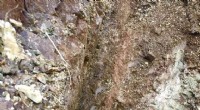
3. Cracks and Joints: Limestone is often fractured, forming cracks and joints. These openings provide pathways for acidic water to penetrate the rock.
4. Freeze-Thaw Cycles: Water seeps into these cracks and joints. During freezing, water expands, putting pressure on the rock. When the ice thaws, the expansion force is released. Repeated freeze-thaw cycles can widen the cracks and joints.
5. Abrasion: Water flowing through these cracks and joints picks up small particles of rock, which act like sandpaper, further eroding the rock.
6. Erosion: As the rock dissolves and the cracks widen, the surface becomes increasingly irregular. This creates depressions that become larger over time, forming potholes.
Formation Process:
1. Acidic rainwater or groundwater penetrates cracks and joints in the limestone.
2. The acidic water dissolves the limestone, widening the cracks and joints.
3. Freeze-thaw cycles further enlarge the cracks.
4. Water flowing through the cracks carries abrasive particles, eroding the rock.
5. The process continues, creating depressions that eventually become potholes.
Unique Features of Potholes in Limestone:
* Round or oval shape: Potholes in limestone often have a rounded or oval shape due to the erosive action of water flowing in all directions.
* Smooth, polished surfaces: The erosive action of water often leaves the surfaces of potholes smooth and polished.
* Variable sizes: Potholes in limestone can vary in size from small depressions to large pits, depending on the extent of erosion.
In conclusion, potholes in limestone regions are formed by a combination of dissolution, freeze-thaw cycles, abrasion, and erosion, all facilitated by the unique characteristics of limestone and the presence of acidic water.