This is because of the principle of superposition: in undisturbed rock layers, the oldest layers are at the bottom, and the youngest layers are at the top. Think of it like a stack of pancakes - the first pancake you put down is at the bottom, and the last pancake is at the top.
Of course, there are exceptions to this rule:
* Erosion and uplift can cause older layers to be exposed at the surface, while younger layers are eroded away.
* Faulting can shift layers of rock, making it difficult to determine their age.
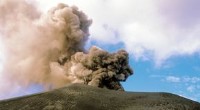
* Volcanic eruptions can deposit new layers of rock on top of older layers.
However, in general, the youngest layers of rock are found where they were deposited most recently, which is typically at the top of a rock sequence or on the surface of the Earth.