Here's why:
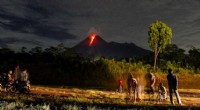
* Volcanic islands: When a volcano erupts beneath the ocean, it can build up layers of lava over time, eventually reaching the surface and forming an island. These islands can be considered mountains, but they are not formed directly by the volcano reaching the surface. The mountain is the accumulated lava and ash from multiple eruptions.
* Plate tectonics: Most mountains are formed through the process of plate tectonics. The Earth's crust is divided into large plates that move slowly over time. When these plates collide, the pressure forces one plate to rise above the other, creating mountains.
* Folding and faulting: The collision of plates can also cause the crust to fold and fracture, creating mountains through these processes.
While volcanic activity can contribute to mountain building, it's not the primary mechanism.
Here are some examples to illustrate the difference:
* Mount Everest: The tallest mountain in the world, formed through the collision of the Indian and Eurasian plates.
* The Andes Mountains: Formed along the western edge of South America due to the subduction of the Nazca plate under the South American plate.
* Hawaii: A volcanic island chain formed by a hotspot, where magma rises from deep within the Earth's mantle.
So, while volcanic eruptions can contribute to mountain formation, the majority of mountains are formed through the interaction of tectonic plates.