* A Natural Bridge: An arch forms when waves erode a headland, creating a hole or opening that goes through the rock. This "bridge" is typically formed by the relentless action of waves crashing against the coastline, carving out softer rock and leaving behind a more resistant archway.
Here's a breakdown:
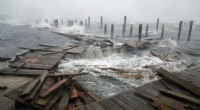
* Erosion: The process of waves constantly wearing away at the coastline is called erosion.
* Headland: A headland is a point of land that juts out into the sea. These are often the first to be attacked by waves.
* Sea Caves: As waves carve out the headland, they can form sea caves on either side.
* Arch Formation: Eventually, the sea caves on either side of the headland might meet, creating a natural arch.
Famous examples of coastal arches:
* Durdle Door, England: A striking example of a natural arch in the UK.
* Natural Bridges National Monument, USA: Home to a collection of impressive arches sculpted by the Pacific Ocean.
* Arch de Triomphe, France: While not on a coast, this famous arch is a good example of how the concept of an arch is used in architecture.
Let me know if you'd like to learn more about coastal erosion or other geological features!