General Terms:
* Lowlands: This is the most general term and simply refers to any land that is at a lower elevation than the surrounding area.
* Low-lying areas: This is another general term that is often used interchangeably with lowlands.
* Depressions: This term is used for areas that are significantly lower than the surrounding land, often forming a basin or valley.
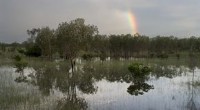
* Swamps: This refers to low-lying areas that are frequently or permanently flooded with water, often characterized by vegetation adapted to these conditions.
* Marshes: Similar to swamps, but typically with less dense vegetation and more open water.
* Floodplains: These are areas adjacent to rivers or streams that are prone to flooding.
* Coastal plains: These are flat, low-lying areas along the coast, often formed by sediment deposition.
More Specific Terms:
* Delta: This refers to a triangular-shaped landform created at the mouth of a river where it flows into a larger body of water.
* Estuary: This is a partially enclosed body of water where a river meets the sea, often characterized by a mix of freshwater and saltwater.
* Wetlands: This is a broad term that encompasses a variety of habitats, including swamps, marshes, bogs, and fens, all characterized by waterlogged soils.
The best term to use for a low-lying land will depend on the specific features of the area. For example, a flat area near the coast could be called a "coastal plain," while a waterlogged area with dense vegetation could be called a "swamp."