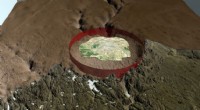
Geodes are hollow, rock-like structures that are typically found in sedimentary rocks. Here's why they're not just quartz:
* Formation: Geodes form when a cavity in the rock is filled with minerals, often deposited from water solutions. This can be quartz, but it's not the only possibility.
* Mineral Contents: While quartz is a common mineral found in geodes, they can also contain other minerals like calcite, amethyst, agate, and even chalcedony.
* Shape: Geodes are typically round or ovoid in shape, but they can also be irregular or have a more complex structure.
How they form:
1. Cavity Formation: A cavity forms in sedimentary rock. This could be from a gas bubble in volcanic rock, a decayed root, or even a fossil.
2. Mineral Deposition: Water rich in dissolved minerals seeps into the cavity. As the water evaporates, the minerals crystallize on the inner walls of the cavity.
3. Growth: Over time, layers of mineral crystals form, creating the characteristic hollow structure of a geode.
So, while quartz is a common mineral found in geodes, it's not the defining characteristic. The key feature is the hollow, spherical (or nearly spherical) structure that forms within a rock.