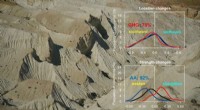
Bedrock is the solid, unweathered rock that lies beneath the soil and other loose sediments. Think of it as the "foundation" of the Earth's crust. It's the foundation upon which everything else is built.
Here's a breakdown of its key features:
Composition:
* Bedrock can be made of any type of rock:
* Igneous rocks: Formed from cooled magma or lava (e.g., granite, basalt).
* Sedimentary rocks: Formed from the accumulation and cementation of sediments (e.g., sandstone, limestone).
* Metamorphic rocks: Formed when existing rocks are transformed by heat and pressure (e.g., marble, slate).
Characteristics:
* Solid and hard: Bedrock is generally resistant to erosion and weathering.
* Unweathered: Unlike soil, bedrock hasn't been broken down into smaller particles.
* Varied in color and texture: Depending on its composition, bedrock can be smooth, rough, light, dark, etc.
* Underlying foundation: Bedrock is the base upon which soil, plants, and structures are built.
Importance:
* Source of resources: Bedrock can contain valuable minerals and ores.
* Foundation for construction: Bedrock provides a stable base for buildings and infrastructure.
* Groundwater source: Bedrock can act as an aquifer, holding and filtering groundwater.
* Geological history: Bedrock can reveal information about the Earth's past, including its formation and climate.
Examples of Bedrock:
* Granite mountains: The iconic granite mountains of Yosemite National Park are examples of exposed bedrock.
* Limestone caves: The intricate formations within limestone caves are formed by the dissolving of bedrock over time.
* Fossil-bearing shale: Fossils are often found embedded in sedimentary bedrock like shale.
Conclusion:
Bedrock is a fundamental part of the Earth's structure and plays a crucial role in our environment. Understanding its composition and properties is vital for a range of fields, including geology, construction, and environmental science.