How it Happens:
* Glacier weight: Glaciers exert immense pressure on the underlying bedrock due to their massive size and weight.
* Friction: The movement of a glacier over the bedrock creates friction, generating heat and contributing to deformation.
* Water pressure: Water trapped beneath the glacier, often in the form of meltwater, can significantly increase the pressure and enhance deformation.
Types of Deformation:
* Elastic deformation: The bedrock temporarily bends under pressure, returning to its original shape when the pressure is released. This is common in areas of low pressure and short-duration deformation.
* Plastic deformation: The bedrock permanently deforms under high pressure and prolonged stress. This results in changes in the shape and structure of the bedrock.
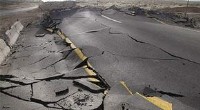
* Brittle deformation: This occurs when the bedrock fractures due to high stress. This can lead to the formation of faults, joints, and other features.
Consequences:
* Bedrock erosion: Sub-glacial deformation contributes to the erosion of bedrock, leading to the formation of valleys, grooves, and other landforms characteristic of glaciated landscapes.
* Ice flow patterns: The deformation of the bedrock influences the flow patterns of the glacier. For example, areas of high deformation can cause the glacier to flow faster.
* Sediment transport: Sub-glacial deformation can move sediments, contributing to the formation of glacial till and other deposits.
* Glacial rebound: After a glacier melts, the bedrock can rebound, resulting in a gradual uplift of the land surface.
Studying Sub-Glacial Deformation:
* Geophysical techniques: Scientists use seismic surveys, radar, and other geophysical methods to study the structure and deformation of the bedrock beneath glaciers.
* Field observations: Examining the landforms and sediments left behind after a glacier retreats provides insights into past sub-glacial deformation.
* Numerical models: Computer models are used to simulate sub-glacial deformation and understand its impact on glacier flow and landscape evolution.
In essence, sub-glacial deformation is a fundamental process in the interaction between glaciers and the Earth's surface. It shapes landscapes, influences glacier dynamics, and provides insights into past glaciation.