Here's why:
* Limestone is primarily composed of calcium carbonate (CaCO3).
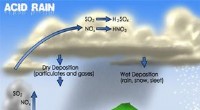
* Water containing dissolved carbon dioxide (CO2) is slightly acidic. This acidic water, often found in caves, reacts with the calcium carbonate in limestone.
* The reaction forms calcium bicarbonate (Ca(HCO3)2), which is soluble in water. This dissolves the limestone over time.
The dissolved calcium bicarbonate drips from the ceiling of the cave. As the water evaporates, some of the calcium carbonate precipitates out, forming stalactites hanging from the ceiling. The remaining water drips to the floor of the cave, where more calcium carbonate precipitates out, forming stalagmites that grow upwards.
So, the process of forming stalactites and stalagmites is a slow and continuous process of dissolution and precipitation of calcium carbonate in limestone caves.