1. Remote Sensing:
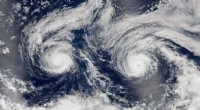
* Satellite Imagery: Provides high-resolution images of Earth's surface, capturing land cover changes, urban development, natural disasters, and environmental conditions.
* Aerial Photography: Provides detailed views of the Earth's surface from airplanes or drones, useful for mapping, land use analysis, and disaster assessment.
* LiDAR: (Light Detection and Ranging) Uses laser pulses to create 3D models of the Earth's surface, revealing terrain features, vegetation, and structures.
2. Geographic Information Systems (GIS):
* Spatial Data Analysis: Enables geographers to analyze, visualize, and interpret spatial data from various sources, such as remote sensing, field surveys, and census records.
* Mapping and Visualization: Creates maps and interactive visualizations to communicate spatial patterns, relationships, and trends.
* Modeling and Prediction: Uses GIS tools to create models that predict future scenarios, such as urban growth patterns or environmental change.
3. Fieldwork and Observation:
* Direct Observation: Involves firsthand observation and documentation of physical and human features of a place, using field notes, sketches, and photographs.
* Surveys and Interviews: Collect data from people through questionnaires and interviews, gathering information on local knowledge, perceptions, and attitudes.
* Sampling and Measurement: Collects data on specific environmental or human characteristics, such as soil samples, water quality measurements, or population density.
4. Data Collection and Analysis:
* Census Data: Provides population statistics, demographics, and socioeconomic information at various spatial scales.
* Government and Agency Data: Access to data from organizations such as NOAA (National Oceanic and Atmospheric Administration), NASA (National Aeronautics and Space Administration), and USGS (United States Geological Survey) on climate, weather, geology, and other environmental factors.
* Social Media Data: Analyzing social media posts and user-generated content to understand human behavior, social trends, and sentiment related to specific places.
5. Modeling and Simulation:
* Climate Modeling: Uses computer programs to simulate Earth's climate system and predict future climate change scenarios.
* Urban Modeling: Simulates urban growth and development patterns, analyzing the impacts of land use changes and infrastructure development.
* Resource Management Models: Helps to optimize resource allocation and management, such as water resources, agriculture, and forestry.
Geographers often use a combination of these methods to conduct research, depending on the specific research question and the nature of the place being studied. By integrating data from multiple sources, they gain a comprehensive understanding of the complex interactions between human and physical systems in shaping the character of places.