1. Weathering:
- Physical weathering: This involves the mechanical breakdown of rocks without changing their chemical composition. Examples include:
- Freeze-thaw: Water seeps into cracks, freezes, expands, and breaks the rock apart.
- Thermal expansion and contraction: Large temperature changes cause rocks to expand and contract, leading to cracks and eventually fragmentation.
- Abrasion: Rocks are worn down by friction from wind, water, or ice carrying sand and other debris.
- Chemical weathering: This involves chemical reactions that alter the composition of rocks. Examples include:
- Acid rain: Rainwater reacts with pollutants to become acidic and dissolve rocks.
- Oxidation: Iron in rocks reacts with oxygen and water to form rust, weakening the rock.
- Hydrolysis: Water reacts with minerals in rocks, breaking them down.
2. Gravity:
- Mass wasting: Gravity pulls loosened rock and soil downhill in a variety of ways:
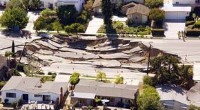
- Slumping: Downward movement of a mass of rock or soil along a curved surface.
- Rockfalls: Rocks break off steep cliffs and tumble down.
- Creep: Slow, gradual movement of soil and rock downhill.
3. Water:
- Rain: Rainwater can carry away soil particles, especially on slopes.
- Rivers and streams: Flowing water erodes riverbeds and banks, carrying away sediment downstream.
- Waves: Waves crashing against coastlines erode cliffs, beaches, and seawalls.
4. Wind:
- Wind erosion: Wind can pick up and transport soil particles, especially in dry areas. This can lead to the formation of dunes and dust storms.
5. Ice:
- Glaciers: Moving glaciers carve out valleys and transport large amounts of rock and sediment.
These forces act together to weaken and break down rocks and soil, which are then transported away by wind, water, or ice. This process of erosion shapes the Earth's surface and creates a variety of landforms.