Here's a breakdown:
* The Basics: Seafloor spreading is a key part of plate tectonics, the theory that the Earth's outer layer (the lithosphere) is made up of several large plates that move and interact with each other.
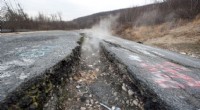
* Mid-Ocean Ridges: The "great crack" you mentioned is actually a system of mid-ocean ridges, underwater mountain ranges that run along the center of most ocean basins.
* Magma Upwelling: At these ridges, magma (molten rock) rises from the Earth's mantle and erupts onto the ocean floor.
* New Crust Formation: As the magma cools and solidifies, it creates new oceanic crust, pushing the existing crust further away from the ridge.
* Conveyor Belt: This process continues, resulting in a constant movement of ocean floor away from the mid-ocean ridges, much like a conveyor belt.
Evidence Supporting Seafloor Spreading:
* Magnetic Stripes: The pattern of magnetic reversals (Earth's magnetic field flips over time) is recorded in the ocean floor, creating symmetrical stripes on either side of mid-ocean ridges.
* Age of Ocean Floor: Oceanic crust is much younger than continental crust, with the oldest crust found furthest away from the mid-ocean ridges.
* Heat Flow: Higher heat flow is measured at mid-ocean ridges, indicating the presence of rising magma.
Significance of Seafloor Spreading:
* Continental Drift: The movement of ocean floor drives the movement of continents, leading to the formation of mountains, earthquakes, and volcanic activity.
* Ocean Basin Formation: Seafloor spreading creates new ocean floor, expanding ocean basins over time.
Seafloor spreading is a fundamental process in Earth science, providing a framework for understanding many geological phenomena.