* Formation Mechanisms: Folded mountains are formed by the collision of tectonic plates, where the pressure of the collision forces layers of rock to buckle and fold. Mid-ocean ridges, on the other hand, are formed by divergent plate boundaries, where plates move apart.
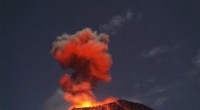
* Volcanic Activity: Mid-ocean ridges are characterized by volcanic activity as magma rises from the Earth's mantle to fill the gap created by the diverging plates. This creates new oceanic crust, which is relatively thin and less prone to folding.
* Seafloor Spreading: As new crust forms at the ridge, it is pushed away from the ridge axis, a process known as seafloor spreading. This spreading motion prevents the accumulation of enough material to form the massive structures that are associated with folded mountains.
Instead of folded mountains, you would find:
* Volcanic ridges: These are underwater mountain ranges formed by the eruption of magma along the ridge axis.
* Hydrothermal vents: These are openings in the seafloor where superheated water, rich in minerals, escapes.
* Transform faults: These are fractures in the ocean floor that allow the plates to slide past each other.
Therefore, while the mid-ocean ridge is a significant geological feature, it is fundamentally different from the environments where folded mountains form.