Intrusive Igneous Rocks:
* Formation: Magma cools and crystallizes *below* the Earth's surface.
* Cooling Rate: The magma cools slowly, allowing for larger crystals to form.
* Texture: Intrusive rocks typically have a coarse-grained texture, meaning the individual crystals are visible to the naked eye. Examples: granite, gabbro, diorite.
* Appearance: Often characterized by a more solid, dense appearance.
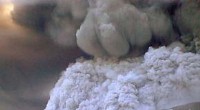
Extrusive Igneous Rocks:
* Formation: Magma (now called lava) erupts onto the Earth's surface and cools quickly.
* Cooling Rate: The lava cools rapidly, leading to the formation of smaller crystals.
* Texture: Extrusive rocks have a fine-grained texture or even a glassy texture if the cooling is very rapid. Examples: basalt, rhyolite, obsidian.
* Appearance: Can have a more porous or glassy appearance due to the rapid cooling.
Here's a table summarizing the key differences:
| Feature | Intrusive Igneous Rocks | Extrusive Igneous Rocks |
|---|---|---|
| Formation | Magma cools underground | Lava cools on the surface |
| Cooling Rate | Slow | Fast |
| Crystal Size | Large crystals | Small crystals or glassy |
| Texture | Coarse-grained | Fine-grained or glassy |
Additional Points:
* Location: Intrusive rocks are often found within mountain ranges, where they were once the source of volcanic eruptions. Extrusive rocks form at volcanoes and on the ocean floor.
* Composition: Both intrusive and extrusive rocks can be composed of the same minerals, but the rapid cooling of extrusive rocks can lead to different mineral compositions.
Let me know if you'd like more detail on specific types of igneous rocks!