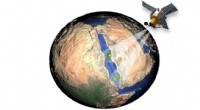
* The Earth is a sphere: Our planet is a near-perfect sphere, curved in every direction.
* Flat surfaces are two-dimensional: Maps are flat, meaning they only have length and width. Trying to represent a three-dimensional object (Earth) on a two-dimensional surface (map) inevitably leads to some kind of distortion.
Types of Distortions:
* Area Distortion: Some areas on a map might appear larger or smaller than they are in reality.
* Shape Distortion: Continents and countries might appear stretched or compressed, changing their true shape.
* Distance Distortion: Distances on a map might be inaccurate compared to real distances.
Map Projections:
Cartographers use different map projections to minimize certain distortions. Each projection has its own strengths and weaknesses. Common examples include:
* Mercator Projection: Preserves angles and shapes near the equator but severely distorts areas near the poles.
* Robinson Projection: Attempts to balance distortions in area, shape, and distance but doesn't excel in any one area.
* Winkel Tripel Projection: Aims for a balance between shape and area, often used for world maps.
The Bottom Line:
No map projection can perfectly represent the Earth on a flat surface. Each projection involves trade-offs, and the choice depends on the intended use of the map.