1. Slow Cooling:
* Environment: Deep underground, within the Earth's crust or mantle.
* Characteristics:
* Large crystals: Slow cooling allows ample time for atoms to arrange themselves into an orderly, crystalline structure. This results in large, easily visible crystals.
* Intrusive rocks: These rocks cool and solidify below the Earth's surface, often forming large masses called plutons.
* Examples: Granite, gabbro, diorite
2. Fast Cooling:
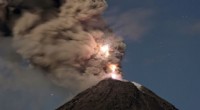
* Environment: Near the Earth's surface, through volcanic eruptions or lava flows.
* Characteristics:
* Small crystals: Rapid cooling leaves less time for crystals to form, resulting in small, often microscopic crystals.
* Extrusive rocks: These rocks cool and solidify on the Earth's surface.
* Examples: Basalt, rhyolite, andesite
3. Very Fast Cooling:
* Environment: Extremely rapid cooling, such as when lava enters cold water or ice.
* Characteristics:
* No crystals: Cooling is so rapid that atoms have no time to arrange themselves into crystals, resulting in a glassy texture.
* Examples: Obsidian, pumice
Key Points:
* Crystal Size: Crystal size is directly related to cooling rate. Slow cooling = large crystals; fast cooling = small crystals.
* Texture: The texture of an igneous rock reflects the cooling rate and is used to classify igneous rocks.
* Composition: While cooling rate affects the texture, the chemical composition of the magma determines the specific type of igneous rock formed (e.g., granite vs. basalt).
In Summary:
The rate of cooling is a critical factor in igneous rock formation. Slow cooling leads to large, well-developed crystals (intrusive rocks), while fast cooling results in small, less-developed crystals (extrusive rocks). Extremely rapid cooling can produce glassy textures.