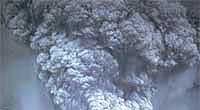
Extrusive Igneous Rocks
* Form from lava: Molten rock that erupts onto the Earth's surface.
* Rapid cooling: The lava cools quickly in the atmosphere or underwater.
* Fine-grained textures: The rapid cooling doesn't allow for large crystals to form, resulting in:
* Aphanitic texture: Crystals are too small to see with the naked eye. Examples: basalt, rhyolite.
* Porphyritic texture: Large crystals (phenocrysts) are embedded in a matrix of smaller crystals (groundmass). Examples: Andesite, dacite.
* Other textures:
* Vesicular texture: Gas bubbles trapped in the lava during cooling create holes (vesicles). Example: Scoria (from volcanic eruptions).
* Glassy texture: Cooling is so rapid that crystals don't have time to form, resulting in a glassy texture. Example: Obsidian.
Intrusive Igneous Rocks
* Form from magma: Molten rock that cools beneath the Earth's surface.
* Slow cooling: Magma cools gradually deep underground.
* Coarse-grained textures: The slow cooling allows for larger crystals to form, resulting in:
* Phaneritic texture: Crystals are large enough to be seen with the naked eye. Examples: Granite, gabbro.
* Other textures:
* Pegmatitic texture: Very large crystals formed due to very slow cooling and high water content in the magma. Example: Pegmatite.
Summary Table
| Feature | Extrusive Igneous Rocks | Intrusive Igneous Rocks |
|---------------------|-------------------------------------|---------------------------------------|
| Cooling Rate | Rapid | Slow |
| Crystal Size | Small | Large |
| Textures | Aphanitic, Porphyritic, Vesicular, Glassy | Phaneritic, Pegmatitic |
In addition to texture, other factors distinguish extrusive and intrusive igneous rocks:
* Mineralogy: The specific mineral composition can vary based on the cooling environment.
* Chemical Composition: Extrusive and intrusive rocks originating from the same magma source may have slightly different chemical compositions due to the processes of cooling and gas loss.
Understanding the textures of igneous rocks helps geologists determine the conditions under which the rocks formed and their potential uses.