Early Earth (4.5 billion years ago - 4 billion years ago):
* Formation: Earth was a hot, molten ball with a constant bombardment of asteroids and meteorites.
* Atmosphere: It likely lacked oxygen, and the atmosphere was composed mainly of hydrogen, helium, methane, and ammonia.
* Water: Oceans began forming, but the surface was likely too hot for liquid water.
* Life: No signs of life yet.
Hadean Eon (4 billion years ago - 4 billion years ago):
* Cooling: Earth started to cool down, allowing for the formation of oceans and continents.
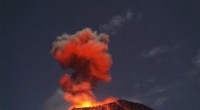
* Volcanic activity: Frequent and intense volcanic eruptions.
* No life: Conditions were too harsh for life to evolve.
Archean Eon (4 billion years ago - 2.5 billion years ago):
* First life: The first single-celled organisms, mostly bacteria and archaea, appeared.
* Oxygen production: Photosynthetic bacteria started releasing oxygen into the atmosphere.
* Continents: Small continents began to form.
Proterozoic Eon (2.5 billion years ago - 540 million years ago):
* Oxygen buildup: Oxygen levels increased significantly, leading to the Great Oxidation Event.
* Complex life: The first multicellular organisms evolved.
* Supercontinents: Large landmasses, like Rodinia, formed and broke apart.
Phanerozoic Eon (540 million years ago - present):
* Cambrian explosion: A rapid diversification of life, leading to the evolution of most major animal groups.
* Mass extinctions: Several mass extinctions, including the Permian-Triassic extinction, the largest in Earth's history.
* Continents: The continents continued to move, eventually forming the current configuration.
Recent past:
* Ice Ages: Earth has experienced several periods of glaciation, most recently the last glacial maximum around 20,000 years ago.
* Human impact: Human activities have begun to significantly impact Earth's climate and ecosystems.
To understand Earth's past condition, we need to look at different time periods and consider the complex interactions between geological, atmospheric, and biological processes.