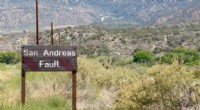
Faults: The Cracks in the Earth's Crust
* Definition: Faults are fractures in the Earth's crust where rocks have moved past each other. Imagine a giant crack in the Earth's surface.
* Types: There are different types of faults, including:
* Normal faults: Occur when rocks are pulled apart (extension). The hanging wall (block above the fault) moves down relative to the footwall (block below the fault).
* Reverse faults: Occur when rocks are pushed together (compression). The hanging wall moves up relative to the footwall.
* Strike-slip faults: Occur when rocks slide horizontally past each other.
Earthquakes: The Result of Fault Movement
* Friction and Stress: Along faults, rocks are constantly under stress. As the stress builds up, friction prevents the rocks from moving smoothly.
* Sudden Release: Eventually, the stress becomes too great, overcoming the friction. The rocks suddenly slip past each other, releasing a tremendous amount of energy. This sudden release of energy is what causes an earthquake.
* Focus and Epicenter: The point within the Earth where the rupture starts is called the focus. The point on the Earth's surface directly above the focus is called the epicenter.
* Seismic Waves: The energy released during an earthquake travels in the form of seismic waves, which cause the ground to shake.
In Summary:
Faults are like the seams in the Earth's crust. They are zones of weakness where movement can occur. Earthquakes are the result of sudden, rapid movements along these faults.
Think of it this way: Imagine a piece of wood with a crack in it. If you bend the wood, the crack will eventually break open. In the same way, faults in the Earth's crust break open when the pressure becomes too great, causing an earthquake.