Physical geology and historical geology are intertwined disciplines within the broader field of geology. While they both study the Earth, they focus on different aspects and use different approaches:
Physical Geology: The "How" of the Earth
* Focus: Processes that shape the Earth's surface and interior.
* Methods: Observation, experimentation, and analysis of rocks, minerals, and landforms.
* Examples:
* Plate tectonics and the movement of continents
* Formation of rocks, minerals, and soils
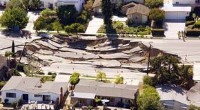
* Volcanic eruptions, earthquakes, and landslides
* Weathering, erosion, and sedimentation
* Hydrologic cycle and groundwater flow
Historical Geology: The "When" and "What" of the Earth
* Focus: Understanding the Earth's past through the study of rocks, fossils, and geologic events.
* Methods: Interpretation of rock layers, fossils, and geologic maps.
* Examples:
* Dating rocks and fossils to reconstruct Earth's history
* Studying past climates, environments, and ecosystems
* Tracing the evolution of life on Earth
* Investigating the causes of mass extinctions
* Understanding the formation of continents and oceans over time
Key Differences:
| Feature | Physical Geology | Historical Geology |
|---|---|---|
| Focus | Processes shaping the Earth | Earth's past and its evolution |
| Approach | Observation, experimentation, analysis | Interpretation, reconstruction, chronology |
| Timeframe | Present and ongoing processes | Past events and geological time |
| Tools | Fieldwork, lab experiments, instruments | Rock layers, fossils, geologic maps |
| Examples | Plate tectonics, weathering, volcanism | Dating rocks, tracing evolution, understanding past climates |
Interdependence and Complementarity:
* Historical geology relies on physical geology: Understanding the processes that shaped the Earth (physical geology) helps interpret the record of past events (historical geology).
* Physical geology informs historical geology: Studying past events (historical geology) provides context and data for understanding present-day processes (physical geology).
In essence, physical geology provides the tools and understanding to decipher the "how" of the Earth's history, while historical geology utilizes those tools to reconstruct the "when" and "what" of Earth's past. Both disciplines work together to create a comprehensive picture of our dynamic planet.