Direct Observation:
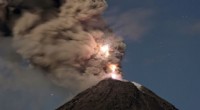
* Volcanic Eruptions: Magma, molten rock from the Earth's mantle, erupts through volcanoes, bringing up samples of the interior. Analyzing these samples provides information about the composition, temperature, and pressure of the Earth's interior.
* Deep Mining: Though mining operations reach depths of only a few kilometers, they provide access to rock samples that can be analyzed for clues about the Earth's composition and structure.
* Drilling: Deep drilling projects, like the Kola Superdeep Borehole (12.2 km deep), provide the most direct evidence of the Earth's interior. However, these projects are expensive and challenging.
Indirect Observation:
* Seismic Waves: Earthquakes generate seismic waves that travel through the Earth's interior. By studying how these waves travel, including their speed, direction, and changes in their properties, geologists can map the Earth's layers and deduce their composition.
* Gravity and Magnetic Fields: The Earth's gravity and magnetic fields are influenced by the distribution of mass and the presence of iron in its core. By studying these fields, scientists can infer the density and composition of the Earth's interior.
* Meteorites: Meteorites are fragments of asteroids and other celestial bodies that have fallen to Earth. Studying meteorites, particularly iron meteorites, can provide insights into the composition of the Earth's core, which is believed to be made mostly of iron and nickel.
* Laboratory Experiments: Geologists conduct experiments under high pressure and temperature conditions to simulate the environment deep within the Earth. This helps them understand how minerals behave under such extreme conditions and how rocks deform and melt.
Combining Evidence:
Geologists use all these methods together to build a comprehensive picture of the Earth's interior. By integrating data from different sources, they can create models that depict the Earth's structure, composition, and dynamics.
In summary, geologists rely on a combination of direct and indirect observations, laboratory experiments, and advanced technology to understand the Earth's hidden depths. While direct access is limited, these methods provide valuable evidence that helps scientists unravel the mysteries of our planet's interior.