Here's why:
* California's climate: California has a Mediterranean climate, meaning it receives most of its precipitation in the winter. This means that while there was snow accumulation in the Sierra Nevada, it wasn't enough to form large, expansive glaciers like those found in other parts of the world.
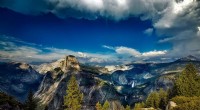
* Elevation: While the Sierra Nevada has high peaks, they are not as high as mountain ranges like the Alps or the Himalayas. The glaciers in California were mostly confined to cirques (bowl-shaped depressions) and valleys, creating features like U-shaped valleys and moraines.
However, there are some indirect effects of glacial erosion in California:
* Formation of alpine lakes: Glaciers carved out valleys, which often filled with water after the ice melted, creating lakes like Lake Tahoe.
* Rock flour: As glaciers move, they grind rock into fine sediment called rock flour. This rock flour can be transported by rivers and deposited elsewhere, contributing to the fertility of California's soils.
It's important to note:
* The effects of glaciation in California are not as dramatic as in other parts of the world.
* While the glaciers themselves are long gone, their influence on the landscape and the state's geology is still evident today.
Therefore, while California doesn't boast grand, glacial-carved landscapes like those found in Alaska or Scandinavia, the evidence of its ancient glaciers can still be seen in the mountains and lakes that define its beauty.