Here's why:
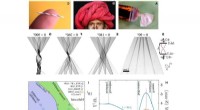
* Fine particles: Clay soil has the smallest particles of all soil types. These tiny particles are tightly packed together, creating a dense structure.
* High surface area: The small size of clay particles gives them a very large surface area. This allows them to hold onto water and other substances more strongly.
* Strong attraction: Clay particles have a strong electrical charge, which attracts water molecules and other charged particles. This further contributes to their stickiness.
Other factors that influence stickiness:
* Moisture content: Clay soil is stickiest when it is wet.
* Organic matter: The presence of organic matter can reduce stickiness by improving soil structure.
* Type of clay: Some clay minerals are more sticky than others.
Note: While clay soil is the stickiest, other soil types can also be sticky, especially when they are wet. For example, silt soil can also be quite sticky.